Idan Binyamin
August 21, 2025
The Marker
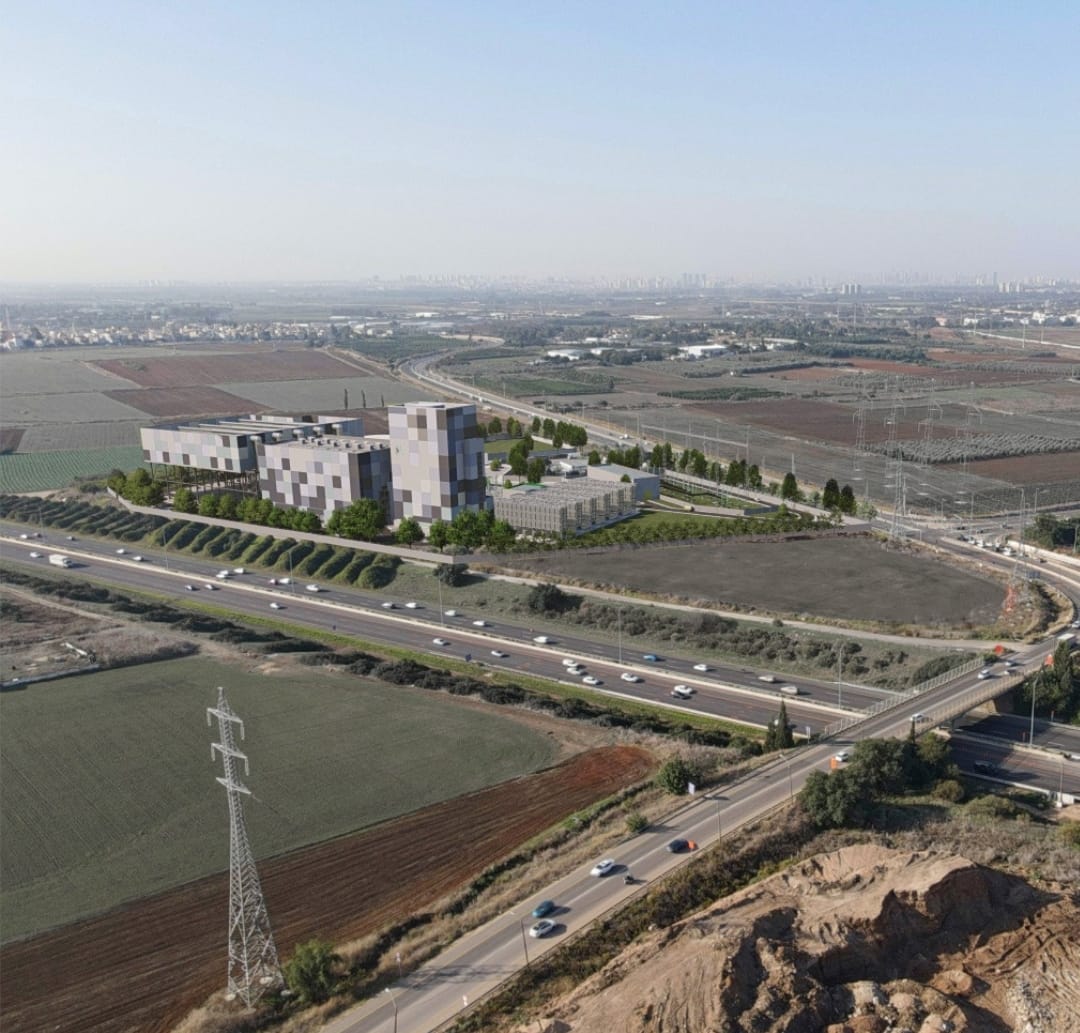
The government approved this morning (Thursday) the construction of the Reindeer power station near Kfar Saba (National Infrastructure Plan 91). This became possible after no minister in the government voiced opposition to the station’s approval since it was placed on the government’s agenda three weeks ago. The decision reached the government following the National Committee for Planning and Construction of National Infrastructure Projects (the NIC) approving last month, for the third time, the construction of the Reindeer power station, owned by Rapac, Generation Capital Fund, and the Phoenix Group.
The automatic approval process—assuming no minister objects—was legislated in the 2023 Economic Arrangements Law. The amendment was intended to prevent situations in which government ministers avoid promoting essential infrastructure such as power stations. These types of infrastructure often face opposition from nearby residents—a phenomenon known as NIMBY (Not In My Backyard). Finance Minister Bezalel Smotrich requested a discussion on the matter but eventually withdrew his request.
In April 2024, the government, led by Energy Minister Eli Cohen, decided to return the Reindeer power station plan for further discussion by the NIC. Cohen’s main claim was that the station’s developers had not completed planning a diesel pipeline intended to serve the station during emergencies. This followed a decision a year earlier by former Energy Minister Israel Katz, who also postponed discussion of the station. The NIC approved the diesel pipeline on the condition that the station’s developers implement protective measures to prevent the pipeline from endangering groundwater. The plan received professional support from the Water Authority and the Ministry of Health. Nevertheless, several local authorities filed a petition against the construction of the station—a petition that is expected to be rejected.
The need to approve the construction of new power stations has become urgent. According to the Energy Ministry’s plan, 13 new power stations—most in central Israel—are expected to be built by the end of the next decade to meet the country’s electricity needs. Constructing a power station takes 10 to 12 years. For example, the developers of the Reindeer power station began planning it after receiving the government’s preliminary agreement back in 2017. Only now, eight years later, they received government approval to move on to the construction phase, which will take at least four more years.
The construction of new power stations, alongside the promotion of renewable energy, is essential not only to secure Israel’s future energy needs—including electric vehicles and data centers—but also to ensure competition among market players, which is expected to prevent increases in electricity prices.
Due to a lack of competition—and after the government, under former energy ministers Karine Elharrar, Israel Katz, and Eli Cohen, delayed approvals for new power stations—the Electricity Authority was forced to offer financial incentives to speed up the construction of the already-approved Kesem power station. As a result, electricity consumers will pay over 350 million shekels to encourage the station’s developers (Mivtach Shamir and Kibbutz Givat HaShlosha) to complete it by 2029.
In April 2024, the government rejected the expansion of the OPC Hadera power station. However, unlike with Reindeer, the rejection came without any professional justification. OPC petitioned the High Court of Justice, and the government was forced to withdraw its decision after failing to defend it. This month, the government is expected to revisit the matter. Despite the costly delay to the public, if this expansion is approved, competition is expected to return to the electricity sector, potentially lowering electricity prices.
Published by TheMarker, on August 7th, 2025
© All rights reserved to the Haaretz publishing Ltd. TheMarker.
 Energy
 Environment
 Transportation
 Logistics


